


Phoenix Hot Air Balloon Rides: Is a Sunrise Flight Worth It?
- September 4, 2026
- Arizona Guides
A hot air balloon ride over the Sonoran Desert gives you a view of Phoenix that is difficult to experience from a... Read More
 by Celia
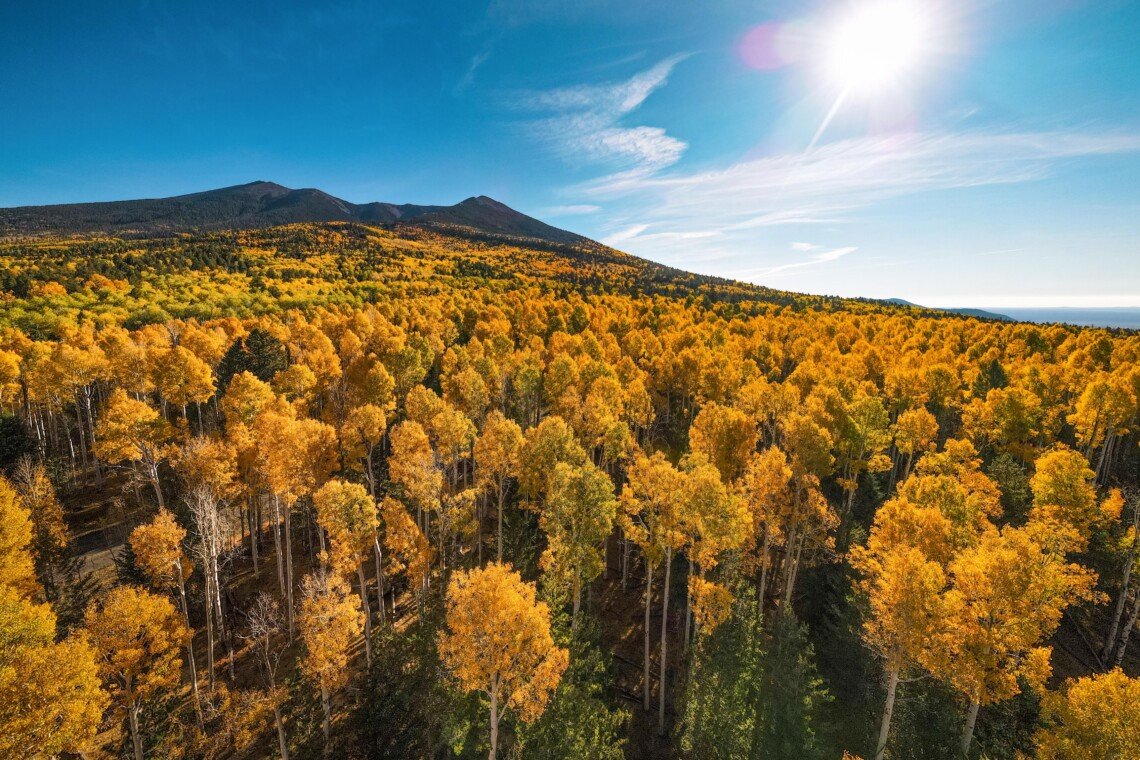
Flagstaff in fall feels different from the Arizona many visitors expect. The desert gives way to ponderosa forest, the San Francisco Peaks rise above town, and entire stands of aspen turn bright gold against dark green pines and a deep blue sky.
The season is short enough that timing matters. Arrive too early and much of the landscape may still be green. Wait too long and the strongest color can move down to lower elevations or disappear after wind and colder weather.
That is why a Flagstaff fall trip works best when you plan around where the color is changing now, not around a fixed date on the calendar.
Discover Flagstaff maintains a seasonal LEAF-ometer that tracks foliage conditions around the area, including Arizona Snowbowl, Oak Creek Canyon, downtown Flagstaff and other viewing locations. Higher elevations generally change first, while lower areas continue later into the season.
If you are thinking about driving up from Phoenix or adding Flagstaff to a northern Arizona trip, here is how to choose the right time, where to go and whether it makes sense to stay overnight.
Flagstaff’s fall-color season usually begins at the higher elevations around the San Francisco Peaks before moving gradually into lower areas.
The most reliable planning window is late September through October, although weather, elevation and seasonal conditions determine exactly when each area reaches its best color. Oak Creek Canyon can continue showing fall color after some of the higher Flagstaff locations have already passed their peak.
This staggered timing is good news if your travel dates are flexible. You do not need every tree in northern Arizona to peak on the same weekend. You need to know where the strongest color is likely to be during your visit.
Before leaving, check the current Flagstaff LEAF-ometer and weather forecast. A few minutes of planning can determine whether you spend the day looking at green trees or driving through miles of glowing aspens.
If you only have time for one fall-color area near Flagstaff, Snowbowl Road is one of the easiest places to start.
The paved road climbs from Highway 180 toward Arizona Snowbowl and passes through stands of aspen that become especially striking in fall. Aspen Corner is one of the best-known stops along the route because visitors can see dense golden foliage without committing to a long hike.
Continue toward Arizona Snowbowl and the scenery becomes broader as the road climbs higher into the San Francisco Peaks.
Arizona Snowbowl also operates its Scenic Gondola during the fall season, weather permitting. The ride climbs above the forest and provides elevated views across the surrounding mountain landscape. Current 2026 operating information shows fall operations extending into October, although schedules can change with weather and seasonal conditions.
If your goal is to see a large amount of foliage without spending the entire day hiking, Snowbowl Road and the gondola can make a strong combination.
Aspen Corner is particularly useful for travelers who want a memorable fall stop without turning the day into a strenuous hiking trip.
The area sits along Snowbowl Road and gives you direct access to golden aspen stands, mountain scenery and nearby trails. You can stop for photographs, take a short walk or continue farther into the forest if you have more time.
It is also one of the places where arriving early can improve the experience. Peak fall weekends draw large numbers of visitors, and parking becomes more competitive as the day progresses.
If photography matters to you, early morning has another advantage. Lower light can create stronger contrast between the pale aspen trunks, yellow leaves and dark evergreen forest.
Oak Creek Canyon gives you a different fall experience.
Instead of the high-elevation aspen landscape around Snowbowl, Highway 89A winds through a canyon where the foliage can include yellows, oranges and reds. The drive connects Flagstaff and Sedona and is especially useful later in the season because lower elevations often retain color after higher areas begin to fade.
This makes Oak Creek Canyon a strong option if your trip already includes Sedona.
Rather than driving directly between the two cities, allow extra time for the road itself. Pullouts and scenic areas give you opportunities to stop, and the change in elevation creates a noticeable transition in vegetation.
For travelers building a longer Arizona itinerary, this is also where HVA’s existing Sedona content becomes useful.
Continuing south after Flagstaff? See our Phoenix to Sedona day-trip guide for driving and tour options.
Fall color in Flagstaff is not limited to mountain roads.
Historic downtown has mature trees, restaurants, shops and walkable streets that make it easy to extend the trip beyond leaf viewing. The city also hosts fall events, markets and seasonal activities throughout September and October.
This becomes important when deciding whether to drive back to Phoenix the same evening.
You can spend the day exploring Snowbowl or scenic drives, return to Flagstaff for dinner, walk downtown and start the next morning without another long drive.
That changes the trip from a rushed foliage run into a weekend.
If you are driving from Phoenix, an overnight stay is worth considering.
It gives you several advantages:
The strongest reason is flexibility. Fall color changes quickly, and being based in Flagstaff gives you more freedom to adjust your route after checking current conditions.
Downtown Flagstaff works well if you want restaurants and evening activity within easy reach.
Areas near Highway 180 can be convenient if your main goal is Snowbowl Road and the San Francisco Peaks.
If you are continuing to the Grand Canyon the next day, staying on the north or northwest side of Flagstaff can also simplify the morning drive.
Check Flagstaff hotel prices and availability for your fall travel dates →
Do not choose a hotel solely because it has the lowest nightly rate. For a short fall weekend, location can save enough driving time to make the trip more enjoyable.
Fall-color trips create one predictable problem: everyone wants photographs, but not everyone wants to carry a full camera setup.
If you use your phone for travel photography, a compact tripod can help with group photos, self-timer shots, video and steady landscape images without adding a full-size tripod to the car.
The UBeesize Flexible Mini Phone Tripod is a particularly compact option. It folds flat, works in portrait or landscape orientation and is small enough to carry without turning a scenic stop into a photography production. It is most useful with compatible MagSafe phones or Peak Design’s mobile system, so check compatibility before buying.
This is the kind of accessory that becomes more useful once you reach the first overlook and realize everyone in the group wants to be in the photograph.

If you are staying overnight, you do not need a complicated itinerary.
Start early and head toward Snowbowl Road. Stop around Aspen Corner while the morning is still cool and the road is less crowded. Continue toward Arizona Snowbowl and, if conditions and operations allow, consider the Scenic Gondola for a higher view over the mountain landscape.
Return to Flagstaff for lunch or spend part of the afternoon exploring another nearby foliage area.
Later, walk through downtown, have dinner and stay overnight instead of immediately beginning the drive back to Phoenix.
The next morning, choose your direction based on the rest of your trip. Head north toward the Grand Canyon, south through Oak Creek Canyon toward Sedona, or return to Phoenix after a more relaxed morning.
That flexibility is one of the reasons Flagstaff works so well as a fall base.
Flagstaff is often used as a gateway to the Grand Canyon, and fall makes that combination even more appealing. Highway 180 itself can be part of the scenic experience as it passes through forested northern Arizona before connecting toward the national park.
If the Grand Canyon is already part of your trip, spending a night in Flagstaff can make it easier to combine foliage viewing with a South Rim visit.
Planning to see the canyon from above? Read our guide to Grand Canyon helicopter tours before choosing between the shorter and longer flights.
That gives you a trip with several different Arizona landscapes rather than treating Flagstaff as a quick stop along the highway.
The biggest mistake is planning around a photograph from someone else’s trip.
Fall color does not follow an exact annual schedule. Elevation, temperature, weather and wind all influence what you will see.
Instead:
Check the Flagstaff LEAF-ometer shortly before departure. Look at the current forecast. Decide whether your best option is Snowbowl, another Flagstaff location or a lower-elevation route such as Oak Creek Canyon.
If your schedule allows it, traveling midweek can also make popular viewing areas easier to enjoy.
Most importantly, do not wait for someone to declare that every tree has reached “peak.” By the time that message spreads widely, the busiest weekend may already be underway.
Yes, especially if you live in or are visiting central Arizona and want a completely different landscape without leaving the state.
Within a few hours, the scenery can change from desert to high-elevation forest, with golden aspens, cool mountain air and roads that feel far removed from Phoenix.
The trip becomes better when you give it enough time. Instead of driving north, taking a few photographs and immediately turning around, spend the day exploring the mountain, stay in Flagstaff, enjoy the town and decide the next morning whether to continue toward the Grand Canyon, Sedona or home.
Fall color is temporary. That is part of what makes the trip appealing.
When the aspens begin turning, you have a short window to see Flagstaff at one of its most distinctive times of year.
Check Flagstaff hotels for your fall travel dates →

A hot air balloon ride over the Sonoran Desert gives you a view of Phoenix that is difficult to experience from a... Read More

Choosing between Upper and Lower Antelope Canyon can be difficult because photographs make the two experiences appear more similar than they are.... Read More
Seeing the Grand Canyon from an overlook gives you an impressive view, but it’s difficult to understand the canyon’s scale from a... Read More