
Where to Stay in Phoenix for a Month or Longer During Winter
- October 19, 2026
- Rental Guides
Choose where to stay in Phoenix for a month in winter by daily routine, transit, kitchen and laundry needs, pool-heating costs and... Read More
 by HVA Team
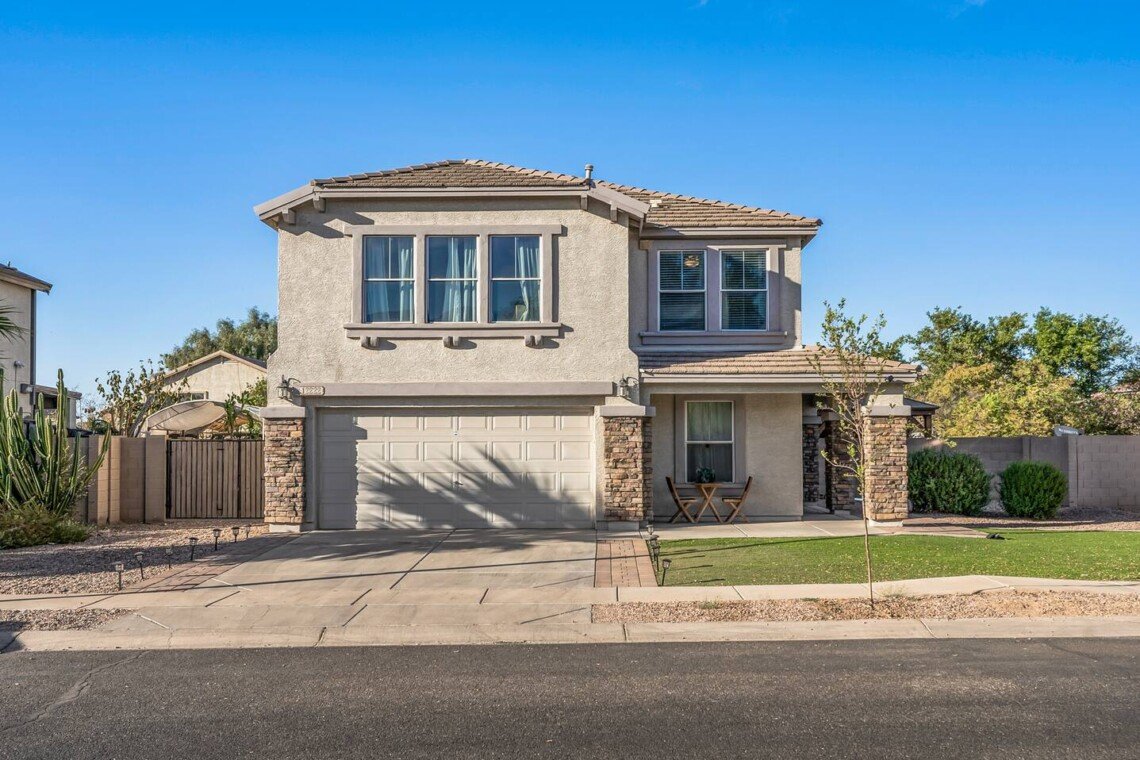
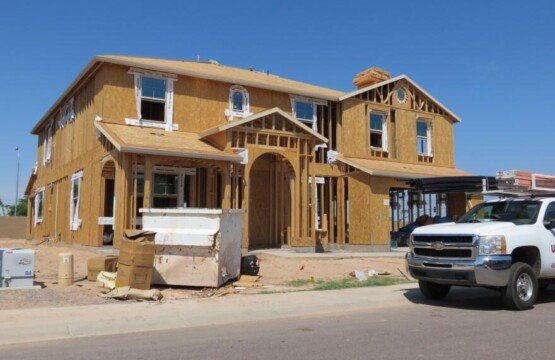
Temporary housing for construction crews in West Phoenix should reduce the daily friction of getting several workers to an I-10, Tolleson or West Valley jobsite while giving them enough space to sleep, cook, wash work clothes and park legally.
West Phoenix sits beside one of the Valley’s busiest industrial corridors. Tolleson, just west of Phoenix, has developed into a major distribution and employment center, while the 99th Avenue and I-10 area continues to add large warehouse and logistics projects. A crew assigned to this side of the metro usually gains little from staying in Downtown Phoenix or Scottsdale unless the project itself requires it.
For crews packing meals before early shifts, a durable Igloo BMX 25-quart cooler is a practical jobsite accessory for carrying lunches and drinks between the rental and the worksite. The housing decision still comes first, but small operational details like meal storage matter more during a multi-week assignment than they do on a short business trip.
If your crew needs furnished housing in West Phoenix, compare HighVoltageArea’s Phoenix and West Valley rentals against the actual jobsite, crew size, vehicles and project dates before booking.
West Phoenix is not one neighborhood. It includes residential and commercial areas stretching west from central Phoenix toward Tolleson, Avondale and Glendale.
For work crews, its main advantage is access to employment areas along:
The City of Tolleson describes itself as a major distribution hub because of its position near I-10, Loop 101 and Union Pacific rail infrastructure. Large employers in the area include food distribution, retail logistics and industrial operations.
That concentration creates recurring work for construction crews, electricians, equipment installers, warehouse buildout teams, refrigeration specialists, automation contractors and project supervisors.
Current West Valley industrial development reinforces the pattern. Recent projects around the 99th Avenue corridor include large warehouse construction near I-10, adding more project activity to an area that already has a substantial logistics base.
For current business and industrial information, see the City of Tolleson Economic Development page.
Do not search “West Phoenix contractor housing” and choose the property with the shortest advertised distance.
Use the actual work address.
A jobsite near 51st Avenue and I-10 creates a different housing search from one near 99th Avenue and Buckeye Road. The same is true for jobs in Tolleson, Avondale or near Loop 101.
Before comparing properties, identify:
A site superintendent who knows the exact gate can often give a better housing reference point than the company’s main business address.
For the broader property-selection checklist, read Contractor Housing in Phoenix: What Work Crews Should Check Before Booking.
West Phoenix is often the stronger base when the job is east of Avondale or concentrated around Tolleson, I-10, Loop 101 or western Phoenix industrial areas.
Avondale and Goodyear become more attractive as the project moves farther west.
For example:
| Jobsite Area | Housing Area to Compare First |
|---|---|
| 51st-75th Avenue near I-10 | West Phoenix |
| 75th-99th Avenue / Tolleson | West Phoenix or Avondale |
| Loop 101 / I-10 area | West Phoenix or Avondale |
| Central Avondale | Avondale |
| Eastern Goodyear | Avondale or Goodyear |
| Western Goodyear / Loop 303 | Goodyear |
These are planning starting points, not fixed boundaries.
A good property on the “wrong” side of a city line may still produce the better commute.
For projects farther west, use Where to Stay for Work in Avondale & Goodyear: Contractor Housing Guide to compare that corridor in more detail.
Construction crews rarely commute on the same schedule as a visitor heading to brunch.
A 5:30 a.m. departure can produce a very different route from an 8:00 a.m. departure. The same applies to crews leaving the site during afternoon traffic.
Before signing a multi-week agreement, check the property-to-jobsite route around the expected shift time.
Pay attention to:
Do not focus only on mileage.
For a six-person crew, ten extra minutes each way becomes two additional crew-hours of travel every workday.
Over a 60-day project, that adds up.
Location gets the workers to the job.
The property still has to function when they return.
A construction crew may need substantially more from temporary housing than a conventional business traveler.
Check:
| Crew Need | What to Verify |
|---|---|
| Sleeping | Actual beds, bedroom layout and privacy |
| Bathrooms | Number available when workers share a shift |
| Parking | Total vehicles permitted |
| Meals | Full kitchen and food-storage space |
| Laundry | In-unit washer and dryer |
| Cooling | Reliable air conditioning |
| Internet | Wi-Fi for supervisors and project administration |
| Storage | Space for personal belongings and ordinary work gear |
| Extension | Ability to request additional dates |
| Occupants | Procedure for worker rotations |
A listing photograph cannot answer all of these questions.
Ask before booking.
Maximum occupancy is not the same as crew capacity.
A house advertised for eight guests may rely on shared queen beds, sleeper sofas or other arrangements that make sense for families but not for unrelated construction workers.
If the company expects each worker to have a separate bed, count beds before comparing rates.
Also consider bedroom sharing.
Two workers on the same schedule may be comfortable sharing a room with separate beds. Workers on opposite shifts may not be.
For rotating crews, bedroom layout can be as important as total square footage.
West Phoenix crews often arrive with pickups, vans or company vehicles.
Parking should therefore be checked before almost anything except location.
Ask:
Do not assume a three-car driveway means three work trucks will fit comfortably.
Vehicle length, width and garage access can change the usable capacity.
HighVoltageArea’s current West Phoenix furnished property specifies driveway parking for up to three vehicles, which gives a coordinator a clear number to compare against the crew’s needs before arrival.
A full kitchen is not just a comfort feature.
It affects the cost and routine of the assignment.
Crews starting early may need to prepare breakfast and lunch before restaurants open. Workers returning after a long shift may prefer to eat at the property rather than make another trip.
For several adults, verify:
If the crew will stay for two or three months, a kitchen that looks adequate in photographs may feel small once five people are storing groceries.
Meal preparation should be part of the housing calculation.
Work clothing can require frequent washing.
An in-unit washer and dryer reduces the need for laundromat trips after the shift and lets workers manage laundry around their own schedules.
For larger crews, ask whether the machines are full-size.
Also establish what is supplied initially and what workers are expected to replace during the stay.
If the project involves dusty, dirty or outdoor work, the laundry setup may be used much more heavily than it would during a typical vacation booking.
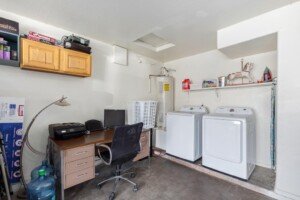
West Phoenix construction assignments can involve prolonged outdoor exposure during warmer months.
Workers need a reliable place to recover after the shift.
Air conditioning should therefore be treated as essential housing infrastructure.
Before a summer stay, know:
The City of Phoenix provides specific heat-safety guidance for workers and contractors, including hydration, rest and access to cooling during dangerous conditions.
A housing provider cannot control jobsite conditions, but the property should allow the crew to cool down, shower, eat and sleep properly after work.
Not every crew member needs to work online after the shift.
Some do.
Superintendents, project engineers, foremen and supervisors may still need to:
If several workers will use the connection at the same time, Wi-Fi quality matters.
A dedicated table or workspace is also useful when someone needs to finish paperwork after leaving the site.
The goal is not to turn the rental into an office. It is to give workers a practical place to complete the administrative work that follows them home.
Night work changes the housing requirements.
Workers trying to sleep during the day need a property that can remain reasonably quiet and dark.
Check:
If half the crew sleeps during the day while the other half is awake, a small house with bedrooms directly beside the kitchen and living room may become difficult to manage.
Ask about the crew schedule before deciding how many workers a property can realistically support.
A hotel may make more sense when:
A furnished house becomes more attractive when:
If the assignment is short or the crew needs individual rooms, compare extended-stay hotels in West Phoenix and Tolleson near the jobsite before committing to a larger property.
For longer assignments, compare the total cost rather than the nightly rate.
Include meals, parking, laundry, cleaning and any mandatory hotel charges in the comparison.
Tolleson is geographically small but contains a large concentration of industrial employers.
That can make it an excellent work destination without producing a large amount of residential inventory inside the city itself.
A nearby West Phoenix or Avondale property may therefore produce a more practical housing option than limiting the search strictly to Tolleson addresses.
This is another reason to search by commute rather than municipality.
If the site is near 83rd, 91st or 99th Avenue, compare housing on both sides of the Phoenix-Tolleson boundary.
The city name on the rental listing matters less than the route workers will actually drive.
The 99th Avenue area has become increasingly important for industrial construction and logistics activity.
Recent development includes the GO|99 North project in Tolleson, a large warehouse project near I-10. Current market reporting also shows strong industrial activity across the broader West Valley.
For current project and market context, see the Colliers Phoenix industrial update.
For housing purposes, this means crews working near 99th Avenue should compare West Phoenix, Tolleson and eastern Avondale rather than starting the search in central Phoenix.
Construction projects rarely keep the exact same staffing level from mobilization through closeout.
One phase may need electricians. Another brings controls specialists. Commissioning may reduce the crew again.
Before booking, ask:
Do not assume one reservation automatically accommodates every staffing change.
The housing provider needs to know who is staying at the property.
The fastest way to determine whether an HVA property fits a West Phoenix project is to send the information that affects the booking.
Provide:
That information allows a property to be evaluated against the assignment rather than making the coordinator exchange several rounds of messages.
Check the actual route at the crew’s normal shift time, not just the mileage. A property that looks close on a map can create a longer daily commute because of freeway access, local roads, construction or traffic patterns.
Confirm the number and type of actual beds rather than relying on maximum occupancy. A property that sleeps eight may include shared beds or other sleeping arrangements that do not work for unrelated crew members.
Ask exactly how many vehicles can be parked at the property and where they can park. A crew arriving with several pickups or vans should not assume street parking or additional spaces will be available.
Confirm restrictions on work trucks, company vans, commercial vehicles and trailers before arrival. Property rules, HOA requirements or parking limitations may prevent certain vehicles from being kept at the rental.
For construction crews, regular access to a washer and dryer can be important because work clothing may need frequent washing. In-unit laundry also prevents workers from spending time traveling to laundromats after a shift. If crew will need industrial washing machine, ask if there is a laundromat nearby.
Check more than whether the property has a kitchen. Several workers may need enough refrigerator and freezer space, cooking equipment, food storage and seating to prepare meals throughout a longer assignment.
Reliable Wi-Fi can be important for supervisors, engineers and project managers who need to submit reports, upload jobsite photos, review documents or communicate with the office after work.
Ask who handles cooling problems and how quickly they can be reported. During hot-weather assignments in Phoenix, dependable air conditioning is particularly important for workers returning from long or outdoor shifts.
Ask about extensions early, even if the project end date is uncertain. Waiting until the reservation is almost over can be risky because the property may already be booked by another guest. If an extension is possible, early notice gives the owner more flexibility and helps the crew avoid a last-minute move, higher housing costs or relocating farther from the jobsite.
Confirm the procedure for changing occupants before booking. Construction projects often bring different workers in as phases change, but properties may require new occupants to be registered or approved. Discuss expected crew rotations early so replacements can be handled properly without creating occupancy or reservation issues.
Start near the actual jobsite. Crews working around I-10, Tolleson, Loop 101 and the 75th-99th Avenue industrial areas should compare West Phoenix and nearby Avondale properties before expanding the search farther away.
Often, yes. Tolleson is a major industrial employment center but geographically small. West Phoenix housing can place crews close to Tolleson worksites without requiring the property itself to have a Tolleson address.
Prioritize the commute, separate beds, bathrooms, vehicle parking, kitchen, laundry, cooling, Wi-Fi and extension terms.
It can be for multi-person crews staying several weeks or months, especially when workers need a kitchen, laundry and shared living space. Hotels can work better for short stays or crews requiring separate rooms.
That depends on the property. Confirm the number and type of vehicles before booking and ask about commercial-vehicle, trailer and street-parking rules.
I-10 connects West Phoenix, Tolleson, Avondale and Goodyear and serves many industrial areas. A property with useful freeway access can simplify a crew’s daily travel, but the local-road portion of the commute still needs to be checked.
Usually there is no reason to begin the search Downtown unless the project has another requirement there. West Phoenix, Tolleson and eastern Avondale generally deserve consideration first for jobsites around the 99th Avenue corridor.
Possibly, depending on the property and future availability. Ask about extension procedures during the original booking and contact the provider as soon as the project schedule changes.
A West Phoenix property should make it easier to run the project.
Put the jobsite on the map first. Check the route at shift time. Count actual beds. Confirm every vehicle. Make sure the kitchen, laundry, cooling and internet match the way the crew will live after work.
If the project is near I-10, Tolleson or the western Phoenix industrial corridor, review HighVoltageArea’s Phoenix and West Valley furnished rentals against your project requirements.
For projects farther west, Where to Stay for Work in Avondale & Goodyear: Contractor Housing Guide covers that corridor. For the complete crew-housing checklist, use Contractor Housing in Phoenix: What Work Crews Should Check Before Booking. Crews working farther north along the West Valley industrial corridor can also use Contractor Housing Near Loop 303: Glendale, Surprise & West Valley.

Choose where to stay in Phoenix for a month in winter by daily routine, transit, kitchen and laundry needs, pool-heating costs and... Read More

Choose where to stay in Phoenix... Read More

Use the 2027 Cactus League stadium... Read More

Plan a 2027 Camelback Ranch visit... Read More

Plan Surprise Stadium spring training in... Read More
Compare 30-, 60- and 90-night commitments,... Read More

Compare furnished houses and hotels for... Read More
HighVoltageArea may earn a commission when you book or purchase through our links. Learn more