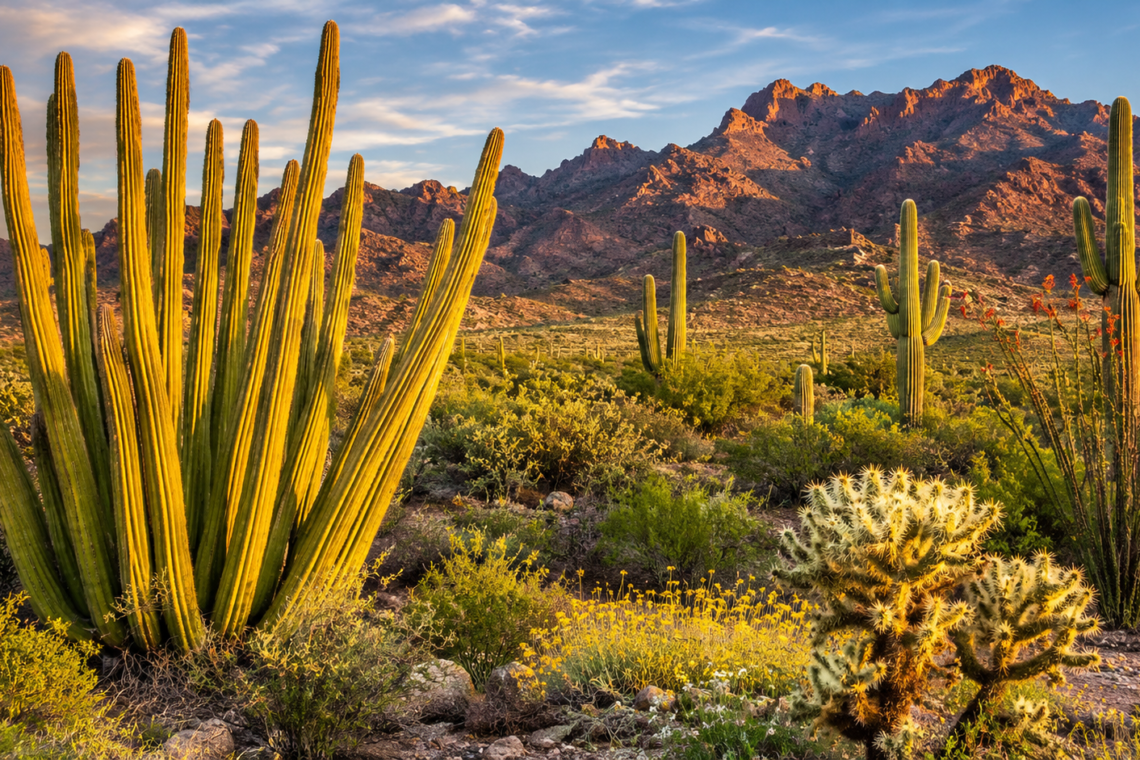
There are no hotels inside Organ Pipe Cactus National Monument. For most visitors, the choice is between a room in Ajo, a limited-service stop in Why, and a campsite inside the monument. The best option depends less on nightly price than on how much driving, self-sufficiency, and time in the desert you want.
This article contains affiliate links. We may earn a commission if you book through them, at no additional cost to you.
Ajo, Why, or camping: compare the tradeoffs
Where to stay
Best for
What you gain
What to check
Ajo
First-time visitors; travelers wanting a room
Town services, restaurants, groceries, fuel; about 34 miles north of the visitor center by NPS guidance
Confirm property location, check-in, and drive time; limited room inventory
Why
RV travelers or a confirmed local stay
Closer to the monument; about 22–25 miles north of the visitor center
Few lodging and dining choices; verify actual services and opening times
Twin Peaks Campground
Tent and RV campers
Sleep inside the monument, close to trails and scenic drives
Reserve/check seasonal procedures; no RV hookups; weather and supply planning
Alamo Canyon Campground
Prepared tent campers seeking a primitive site
Small, quiet, tent-only campground
No water; no RVs or fires; check reservation rules and road access
Day trip
Visitors passing through southwest Arizona
Avoids a hotel night
Longer driving day, less time for scenic roads; avoid night driving when fatigued
Ajo: the most practical overnight base
Ajo is the strongest default for travelers who want a private room, food choices, and a place to rest before or after a desert visit. The National Park Service services guide identifies Ajo as the closest town with hotel-style lodging and a fuller selection of restaurants and groceries. Its mileage reference is approximately 34 miles from the visitor center; allow extra time for stops and traffic rather than treating any drive-time estimate as a promise.
Compare the actual property location, cancellation rules, parking, and whether meals are available at the hours you will arrive. An inexpensive room that requires a late check-in after a long scenic drive may be less useful than a conveniently located stay with flexible arrival.
Why: closer, but not a substitute for a full-service town
Why is a small junction community on Highway 85 north of the monument. It can work for RV parks or a confirmed local accommodation, but visitors should not assume they will find several hotels, evening restaurants, or 24-hour services. The NPS lists limited food and fuel options here. Confirm your actual reservation and operating hours before leaving Ajo or Gila Bend.
Compare lodging after choosing Ajo or Why
Ajo is the more practical starting point if you want conventional lodging and a wider choice of meals and supplies. Why may shorten part of the drive, but its accommodation inventory is limited. Search the exact location before committing to either base.
Compare accommodation options for Ajo and nearby communities. Search Ajo first, then check whether any results are actually located in Why. Compare the final price, check-in arrangements, cancellation terms, and driving distance to the monument; this link opens a general hotel search rather than a preselected property.
If no suitable lodging appears, do not assume that the monument has hotel rooms. Consider permitted camping or a different itinerary rather than relying on an unconfirmed accommodation listing.
Camping inside Organ Pipe
The monument has developed and primitive camping as well as permit-based backcountry options. NPS camping guidance is the authoritative source for campground rules and reservations. Twin Peaks accommodates tents and RVs but does not provide RV utility hookups. Alamo Canyon is a four-site, tent-only primitive campground without water. Backcountry camping requires a permit; it is not the same as pulling off a road and camping wherever you wish.
NPS separately prohibits dispersed roadside camping. Do not interpret the availability of backcountry permits as permission to sleep in a vehicle at a trailhead. Check the exact campground and permit rules for your dates.
A realistic one-day visit
Time block
Plan
Why it works
Before departure
Fill the tank, pack water and food, save offline directions
Avoid relying on scarce services or cellular coverage
Morning
Start at Kris Eggle Visitor Center during its operating hours
Get current road and trail advice; obtain maps
Late morning–early afternoon
Choose one scenic drive or a shorter walk based on heat and road conditions
Leaves enough time to experience the landscape rather than rush
Afternoon
Return via Highway 85, stopping only where services are confirmed
Reduces the risk of being far from town after dark
The visitor center operates seasonally: the NPS basic information page lists 9 a.m.–5 p.m. from November through April and 8 a.m.–4 p.m. from May through October. Park roads and trails may be accessible outside visitor-center hours, subject to closures. Always check alerts before travel.
Driving, dirt roads, and rental cars
Highway 85 and the campground approach are paved, but most scenic and backcountry roads are dirt or gravel. Some require high clearance or four-wheel drive, and weather can change their condition. A standard rental car does not automatically include permission to drive on unpaved roads. Check the specific rental agreement and the park road conditions before selecting a route. If the contract excludes dirt roads, plan a paved-road visit or choose another vehicle arrangement.
The monument is near the international border. Stay on designated public routes, follow posted restrictions, and consult current park safety information. Save offline maps: cell reception is unreliable, although the visitor center offers Wi-Fi. Do not count on a navigation app to select a suitable backcountry road.
Check the rental agreement before choosing a vehicle
If you are arriving in Arizona without a car, compare rental-car options for your arrival airport. Choose the actual pickup location and travel dates, then review mileage, roadside assistance, insurance exclusions, and the supplier’s rules for unpaved roads.
Do not assume that renting an SUV authorizes travel on dirt roads. Ask the supplier specifically about the route you intend to drive and use a paved-road itinerary if the agreement excludes it.
Food, fuel, water, and communications
Buy fuel before entering the monument; there is no fuel station within the park.
Carry drinking water and food for your full outing; the visitor center has limited snacks, not a full grocery service.
Tell someone your planned route and expected return time.
Check heat, flash-flood risk, and road closures before leaving pavement.
Use the restroom and water facilities available at designated developed sites; do not assume every trailhead has them.
Book a night in Ajo if you want a relaxed morning in the monument, a longer scenic drive, or a second day of hiking. Camping is the better fit if being in the desert at dawn and dusk is the purpose of the trip. A day trip makes sense for visitors already driving through the region who can reach the park early and keep their itinerary modest.
Compare lodging by total cost, location, parking, and cancellation terms rather than relying on an advertised nightly rate. If your Arizona trip continues to another park, the statewide road-trip planning guide offers broader routing ideas. Petrified Forest entrance and overnight decisions are useful for travelers planning multiple national-park stops.
Frequently asked questions
Can you stay inside Organ Pipe Cactus National Monument?
Yes, in authorized campgrounds or with a valid backcountry camping permit. There are no hotels in the monument, and unrestricted roadside camping is not allowed.
Is Ajo or Why better for a hotel?
Ajo is the safer default for conventional lodging and town services. Why is closer to the park but has limited accommodation choices; confirm the specific property before building an itinerary around it.
Can I drive a rental car on Ajo Mountain Drive?
Do not assume so. The route is unpaved, and the rental agreement controls what is permitted. Ask the rental company and check current NPS road advice.
Do I need cell service to visit?
No, but prepare for gaps. Download maps, carry a paper backup, and make your route known before leaving town.
Petrified Forest National Park is unusually convenient for an Arizona road trip: one 28-mile park road connects the north entrance on Interstate... Read More
Kartchner Caverns: Which Tour to Book and Where to Stay—Benson, Sierra Vista or Tucson?

 by