

Temporary Housing for Construction Crews in West Phoenix
- September 13, 2026
- Rental Guides
Temporary housing for construction crews in West Phoenix should reduce the daily friction of getting several workers to an I-10, Tolleson or... Read More
 by Celia
Contractor housing in Phoenix should be chosen around the jobsite, crew size, vehicles and project schedule, not simply the lowest nightly rate.
A house that saves money on paper can become the wrong booking if six workers share one bathroom, two pickups have nowhere to park, or the morning drive crosses Greater Phoenix before an early shift. Before committing to housing for a 30-, 60- or 90-day project, check how the property will function on an ordinary workday.
For construction crews, skilled trades, technicians, engineers and project teams, the important questions are practical: Where is the jobsite? How many actual beds are available? How many vehicles can park legally? Can the crew cook and wash work clothes? What happens if the project runs three weeks longer than expected?
HighVoltageArea has furnished homes in Phoenix, Avondale and Surprise for temporary work assignments and extended stays. If your project is in Phoenix or the West Valley, compare the available homes against your jobsite, crew size, dates and vehicle requirements before booking.
Phoenix is not a compact city where any property with “Phoenix” in the address provides roughly the same commute.
A crew working in West Phoenix has different housing needs from a team reporting to North Phoenix. The same applies to projects in Avondale, Goodyear, Glendale, Surprise, Tolleson and along the Loop 303 corridor.
Start with the actual reporting location.
If the project has several entrances, ask which gate or staging area workers will use. For a large industrial or construction site, the difference between the property’s distance from the project boundary and the route to the employee entrance can matter.
Then look at the roads connecting the property and jobsite.
A shorter straight-line distance does not automatically produce the easier commute. Freeway access, local streets, construction zones and shift times all affect the daily drive.
This becomes more important over a long assignment. An inconvenient commute repeated twice a day for three months is not a small detail.
For crews assigned to the Southwest Valley, our Where to Stay for Work in Avondale & Goodyear: Contractor Housing Guide examines the employment area, I-10 access and practical housing choices for workers reporting to jobsites in Avondale and Goodyear.
A listing that says it accommodates eight people does not necessarily provide eight separate beds.
For a vacationing family, that distinction may be manageable. For unrelated adults working long shifts, it can determine whether the property works at all.
Before booking, check:
| Check | Why It Matters |
|---|---|
| Number of bedrooms | Shows how sleeping space is divided |
| Number of beds | Guest capacity can include shared beds or other sleeping arrangements |
| Bed sizes | Determines whether the proposed room assignments work |
| Number of bathrooms | Important when several workers leave for the same shift |
| Bedroom locations | Helps when day and night shifts need different sleep schedules |
| Maximum permitted occupancy | Prevents booking more workers than the property allows |
Do not calculate crew capacity from bedroom count alone.
Four bedrooms can mean four separate beds, six beds or another arrangement entirely. Verify the configuration before assigning workers to the property.
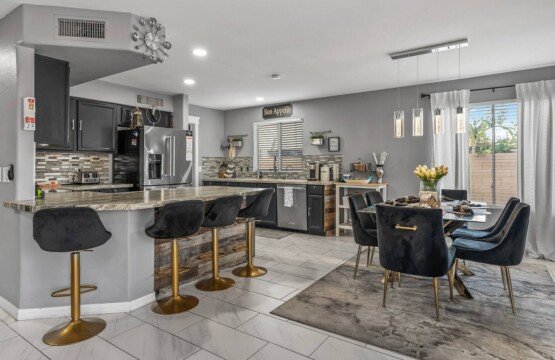
HighVoltageArea’s West Phoenix furnished home, for example, lists four bedrooms and four beds. That information is more useful to a crew coordinator than a guest-capacity number by itself.
Bathrooms are easy to overlook during the housing search.
They become harder to overlook at 5 a.m. when several workers need to leave at the same time.
If the crew follows one shift, consider how many people will be getting ready simultaneously. A larger team with one bathroom may create unnecessary morning delays even when the property technically accommodates everyone.
Split shifts create a different problem. Workers returning from one shift may be showering while another group is sleeping or preparing to leave.
There is no universal worker-to-bathroom formula. The useful question is whether the property’s bathroom arrangement fits this crew’s routine.
“Parking available” does not tell a superintendent or project coordinator enough.
Find out:
Do not assume an ordinary residential driveway can handle the entire crew’s vehicles.
If workers are bringing a trailer, oversized truck or equipment vehicle, disclose that before booking. The property owner or manager needs enough information to determine whether the setup is permitted and physically workable.
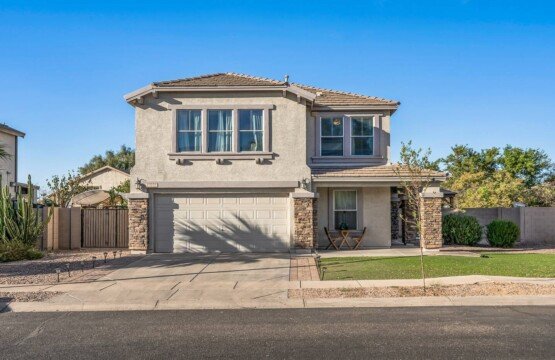
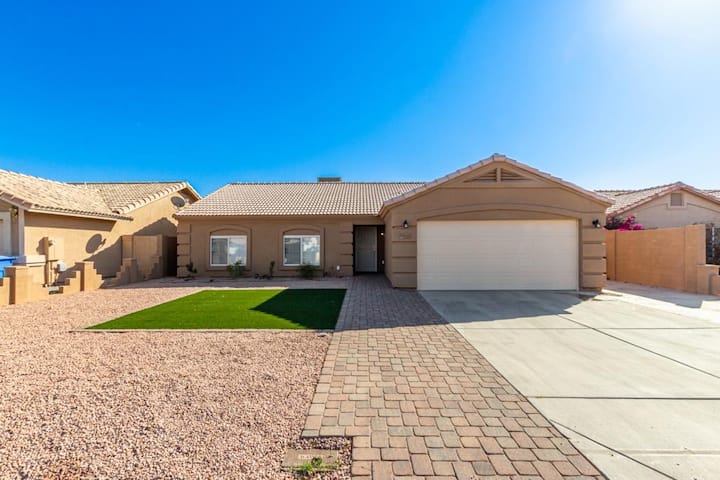
This is also an area where HVA property pages should be checked individually. For example, the current West Phoenix listing specifies driveway parking for up to three vehicles. A crew bringing five pickups should know immediately that it needs a different arrangement rather than discovering the problem at check-in.
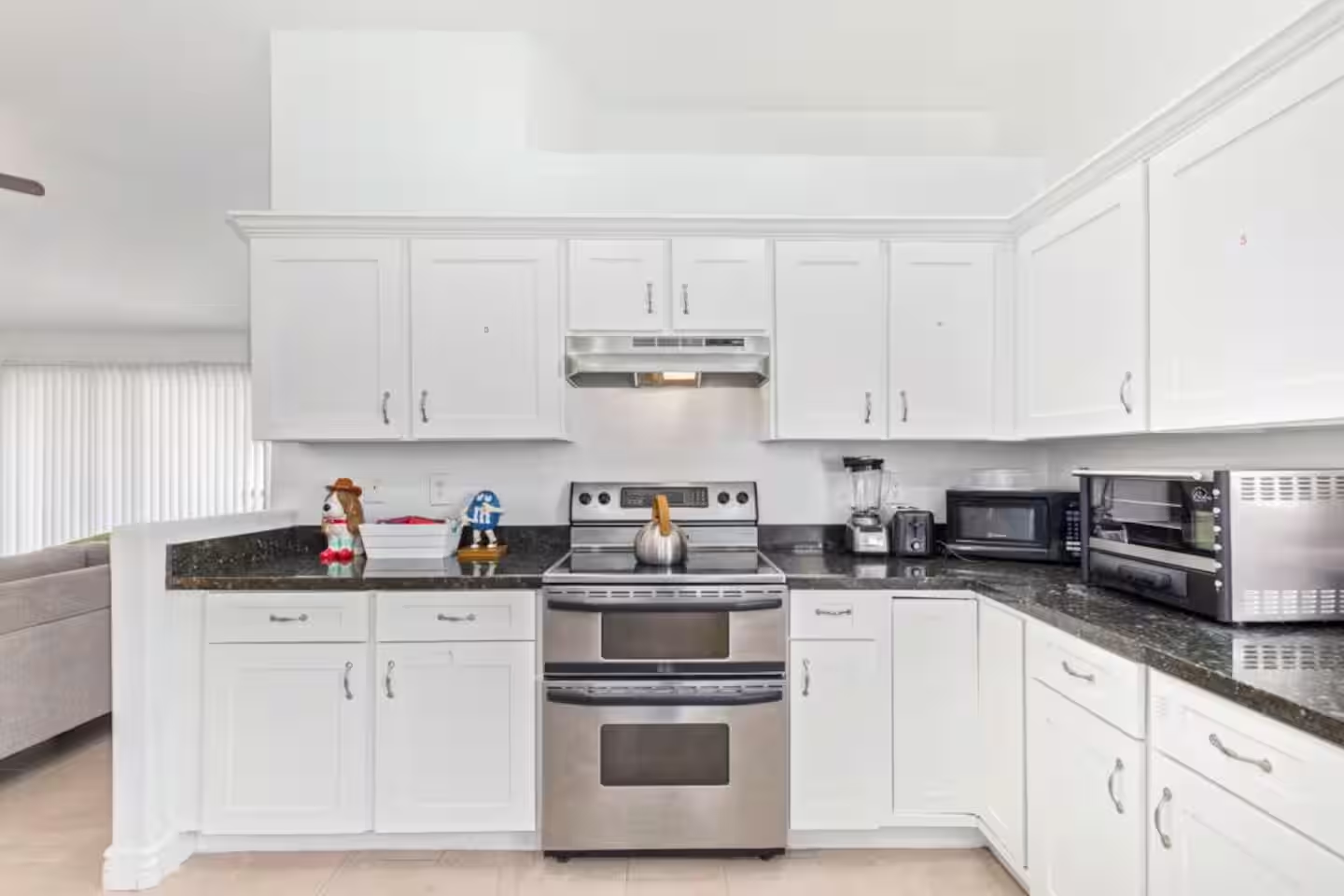
A full kitchen becomes more important as the assignment gets longer.
Restaurant meals and takeout may be manageable for a short business trip. Feeding several workers that way for two or three months is a different calculation.
Check that the property provides more than a refrigerator and microwave.
For a crew stay, useful features include:
The refrigerator deserves particular attention with larger groups. Several adults preparing lunches and dinners can fill an ordinary refrigerator quickly.
Housing with a functioning kitchen also gives workers more control over shift meals. Someone leaving before restaurants open can prepare breakfast or pack food the night before rather than depending on whatever is available near the jobsite.
A washer and dryer can move from “nice to have” to essential during a multi-week construction assignment.
Work clothing may need frequent washing, especially for outdoor trades during warmer months.
An in-unit washer and dryer lets workers handle laundry around shift schedules instead of spending evenings locating a laundromat or waiting for shared machines.
For a larger crew, ask whether the machines are full-size and consider how many people will be using them.
Also establish who supplies detergent and other consumables during a longer stay. Small questions are easier to settle before move-in than after several workers arrive.
Air conditioning in Phoenix is not a decorative amenity.
Workers returning from outdoor jobs during hot weather need housing with functioning cooling. The City of Phoenix treats extreme heat as a serious worker-safety issue and has specific heat-safety requirements for contractors working under certain City contracts.
For summer assignments, ask how cooling problems are handled and whom the crew should contact if the system stops working.
The City also advises people exposed to high temperatures to stay hydrated, take frequent breaks and get indoors during dangerous heat conditions.
Housing cannot eliminate jobsite heat exposure, but it should provide a dependable place for workers to cool down, eat, shower and sleep after the shift.
Wi-Fi is not only for remote workers.
Supervisors, engineers, foremen and project managers may return from the site and still need to:
If several occupants will use the connection simultaneously, ask what internet service the property provides.
A dedicated workspace can also matter when someone needs to complete project administration after hours. A kitchen counter can work occasionally, but it is not an ideal desk for a three-month assignment.
HVA’s current West Phoenix furnished property includes Wi-Fi and a dedicated workspace, in addition to its kitchen and laundry facilities.
A property can look excellent at noon and function badly for someone trying to sleep at noon.
If the project uses night shifts or rotating schedules, consider:
For rotating crews, separate bedrooms become more valuable because one worker may be sleeping while another is getting ready for work.
Do not assume everyone will adapt to the same household schedule.
Comparing a furnished house with a hotel requires more than multiplying the advertised nightly rate by 30.
Establish what is included in the housing price.
Ask about:
Then compare the total housing cost, not one advertised number.
A furnished house can provide a kitchen, laundry and shared living areas that several hotel rooms may not provide. A hotel can provide housekeeping, front-desk service and individual rooms that a house may not provide.
Neither format wins automatically.
The correct comparison depends on crew size, assignment duration, work location and how the team will use the property.
A hotel may make sense for:
A furnished house becomes more compelling when:
Do not assume a house is cheaper. Compare quotes for the same dates and number of workers.
The more useful question is:
Which option provides the facilities this crew needs at an acceptable total cost near the project?
For a short mobilization or a one-person assignment, compare extended-stay hotel availability near the jobsite before committing to a larger furnished property.
Construction schedules move.
Weather, inspections, material delays, subcontractor sequencing, equipment deliveries and commissioning can all affect the date a crew leaves Arizona.
Before signing a longer housing agreement, ask:
Find out how extensions work and how much notice is required.
A project may begin with four workers, expand to six and return to three during closeout.
The property still needs to comply with its permitted occupancy and booking terms.
Understand the cancellation and early-departure terms before booking.
Do not assume occupants can be substituted freely. Ask the housing provider how registered guests and crew changes are handled.
The goal is not to predict every schedule change. It is to know what happens when one occurs.
The longer the crew stays, the more important ordinary household functions become.
| Stay Length | Give Extra Attention To |
|---|---|
| Around 30 days | Location, beds, parking, total cost |
| Around 60 days | Kitchen, laundry, storage, Wi-Fi, cleaning |
| Around 90 days or longer | Extension terms, utility terms, workspace, crew changes, household routine |
Arizona also distinguishes longer residential lodging from shorter stays for certain tax purposes. Beginning January 1, 2025, residential rental owners no longer collect city transaction privilege tax on income from long-term lodging stays of 30 days or more.
That does not mean every 30-day property has identical pricing or terms. Ask the provider for the quote and agreement covering your dates.
For more on longer stays, read HighVoltageArea’s Arizona Extended-Stay Guide: Furnished Housing for 30 Days or More.
Jobsite proximity comes first, but workers still need to live somewhere for the rest of the day.
After narrowing properties by commute, check the practical surroundings:
The objective is not to find an entertainment district.
For a project assignment, a property that makes work, groceries, meals and sleep straightforward may be more useful than one surrounded by visitor attractions.
A superintendent may know the jobsite. HR may know the employee names. Procurement may know the approved budget. The person arranging the property needs all three.
Prepare a simple housing brief before contacting providers:
| Information | What to Provide |
|---|---|
| Jobsite | Actual work address or reporting point |
| Dates | Expected arrival and departure |
| Crew size | Number of occupants |
| Beds | Number and configuration required |
| Bathrooms | Minimum acceptable arrangement |
| Vehicles | Cars, pickups, vans and trailers |
| Shift | Day, night or rotating |
| Kitchen | Required or optional |
| Laundry | Required or optional |
| Internet | Standard use or substantial work use |
| Pets | Number and type, if applicable |
| Budget | Total or monthly target |
| Flexibility | Likelihood of extension or crew changes |
Sending this information at the beginning eliminates properties that were never going to work.
It also lets HVA determine whether one of its Phoenix, Avondale or Surprise homes fits the assignment without wasting the coordinator’s time.
Check the route at the times the crew expects to travel.
Do not rely on maximum guest capacity.
Compare that with shift times.
Disclose pickups, vans and trailers.
Confirm the appliances and basic kitchen equipment.
For longer assignments, this can save considerable time.
Ask if supervisors or engineers will depend on it for project work.
Get the full cost rather than comparing headline rates.
Know the extension process before you need it.
Confirm the rules for changing registered occupants.
The crew should know whom to contact if the air conditioning, plumbing, internet or another essential service fails.
Parking, commercial vehicles, trailers, occupancy and quiet hours should be understood before arrival.
Contractor housing generally refers to furnished accommodation used by workers, construction crews, technicians, engineers or project teams during temporary assignments in the Phoenix area. Depending on the crew and project, this can include furnished houses, apartments or extended-stay hotels.
Start with the jobsite commute, number of beds, bathrooms, vehicle parking, kitchen, laundry, Wi-Fi and the terms for extending or changing the stay. Crew size and shift pattern should determine which features matter most.
A furnished house can work well for several workers on a longer assignment because it may provide a kitchen, laundry and shared living space. Hotels can be more suitable for shorter stays, individual workers or teams that need separate rooms and hotel services.
Yes, furnished properties are available for extended assignments, but minimum stays, maximum occupancy, pricing and extension terms vary by property. Confirm the agreement for your specific dates and crew.
Usually, the jobsite should be one of the first factors considered. A lower-priced property can lose much of its advantage if it creates a difficult commute for several workers every day.
It depends on the property. Ask about vehicle count, size, driveway capacity, street restrictions, trailers and any property or neighborhood rules before booking.
That depends on the housing agreement and subsequent availability. Ask about extension procedures when making the original booking and give the provider as much notice as possible if project dates begin to move.
Provide the jobsite, dates, crew size, required beds, vehicles, shift schedule and any essential needs such as kitchen, laundry or workspace. Mention possible extensions if the project completion date is uncertain.
Contractor housing should make the assignment easier to run.
Start with the jobsite. Confirm beds and bathrooms. Account for every vehicle. Check the kitchen, laundry, cooling and Wi-Fi. Understand the complete price and know what happens when the schedule changes.
Those checks eliminate many bad options before anyone arrives in Phoenix.
If your project is in Phoenix or the West Valley, review HighVoltageArea’s furnished homes in Phoenix, Avondale and Surprise and compare the property details with your crew requirements.
For crews reporting to jobsites in the Southwest Valley, Where to Stay for Work in Avondale & Goodyear: Contractor Housing Guide explains how to choose between Avondale, Goodyear and nearby areas based on work location, I-10 access and the practical requirements of a longer assignment.
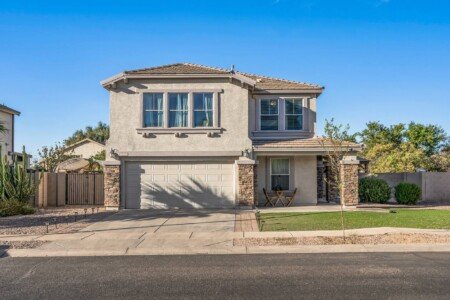
Temporary housing for construction crews in West Phoenix should reduce the daily friction of getting several workers to an I-10, Tolleson or... Read More
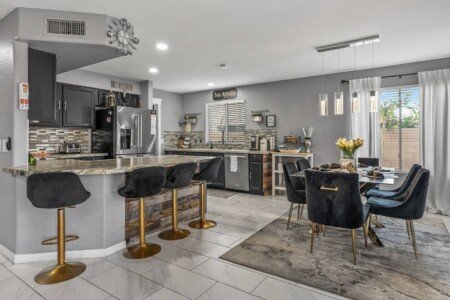
Staying in Arizona for a month or longer changes what you should expect from accommodation. A hotel room that works well for... Read More